
The Intelligence Hidden in Your Feet
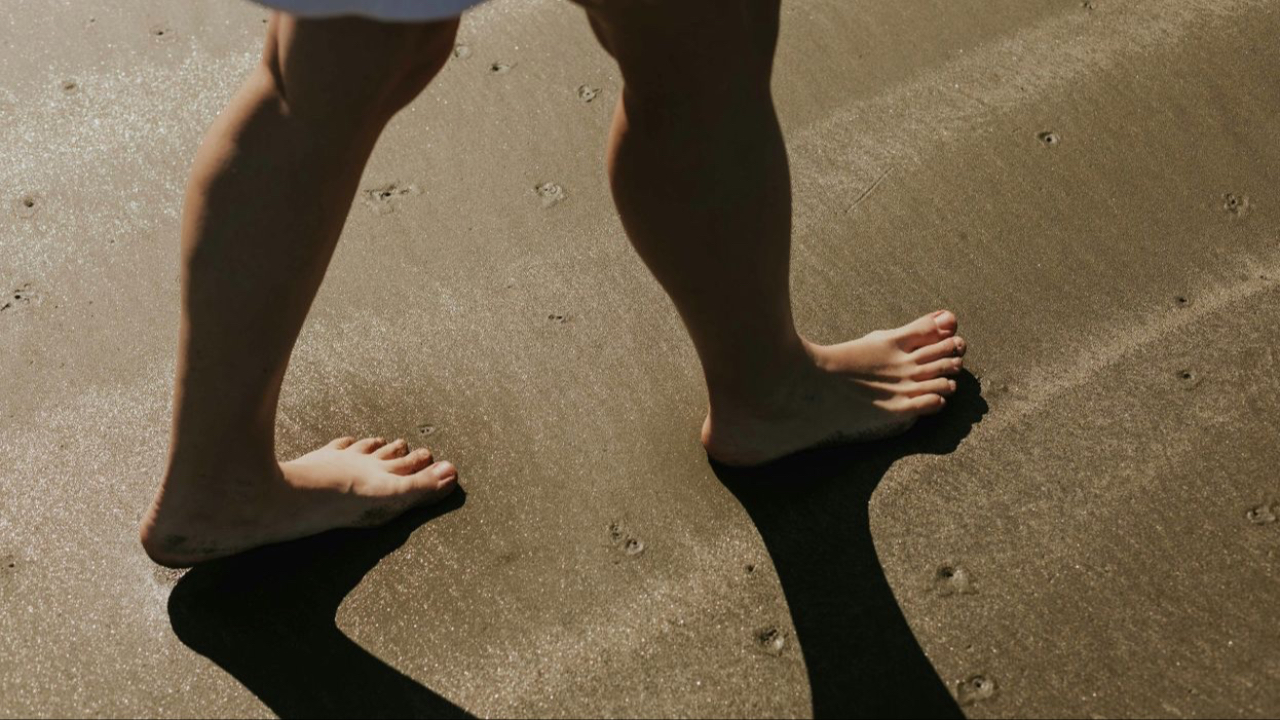
Every step you take begins with information.
Tiny pressure receptors in your feet send thousands of messages to your brain every second...
Telling it where you are, how much weight you’re carrying, and which muscles need to respond next.
When you move quickly or spend much of the day sitting, those messages fade into background noise.
The feet stop speaking clearly, and the body loses part of its map.
You may notice it as wobbling balance, sore knees, or a vague feeling of being disconnected from yourself.
The feet are not just supports.
They are instruments of perception...
One of the body’s oldest ways of knowing.
How Balance Builds from the Ground Up
At the bottom of each foot are more than 200,000 nerve endings that link directly to the spinal cord and cerebellum, the part of the brain responsible for coordination and calm.
These signals help regulate posture, blood pressure, and even breathing rhythm.
When those nerves are stimulated through pressure or movement, they activate a chain of responses through the vagus nerve and parasympathetic system.
The heart rate eases, muscles release, and a quiet sense of stability spreads through the body.
A 2023 study at the University of Exeter found that people who practiced five minutes of mindful standing or gentle foot rocking twice daily showed measurable improvements in balance and heart-rate variability within two weeks.
Their bodies were literally becoming more coordinated from the ground up.
Intelligence is not confined to the head.
It also lives in the soles of your feet.
The Grounding Practice
You can begin to wake up this quiet intelligence right now.
1️⃣ Stand or sit with your bare feet flat on the floor.
2️⃣ Close your eyes and slowly shift your weight forward until you feel pressure under your toes.
3️⃣ Move it back toward your heels, then side to side, exploring where balance feels most natural.
4️⃣ Let your breath follow the movement, easy and unforced.
5️⃣ After a few minutes, pause and notice the subtle tingling or warmth under your arches.
That sensation is information returning—your body remembering where the ground is.
Learning to Trust the Ground
The longer you spend noticing the contact between your feet and the floor, the more your nervous system begins to rest.
You are not holding yourself upright by willpower; gravity is already doing that.
The body only needs to remember how to cooperate.
This awareness softens everything above it—the knees, the hips, the spine, even the mind.
When the base feels secure, thought and emotion become less scattered.
The intelligence hidden in your feet is the wisdom of belonging to the earth again.
Be well,
Jim Donovan, M.Ed.
References
-
Patel, R., et al. (2023). Proprioceptive stimulation and autonomic balance: Effects of mindful standing. Frontiers in Human Neuroscience, 17, 1128479.
-
McCraty, R., & Shaffer, F. (2022). The role of somatic feedback in regulating autonomic function. Applied Psychophysiology and Biofeedback, 47(2), 89–103.
-
Cohen, M. A., et al. (2021). Grounding, posture, and emotional stability: Somatosensory inputs in self-regulation. Biological Psychology, 163, 108127.
Author

Jim Donovan
Author
Jim Donovan, M. Ed. is a professional musician, author, trainer, Assistant Professor at Saint Francis University, and TEDx speaker. He’s editor of the daily Jim Donovan Digest newsletter and host of the Sound Health Podcast.
Get Jim's free 12-minute "Brain Humming" Lesson—PLUS weekly wellness wisdom.
Categories
All CategoriesRecent Posts
